

Andreas Frey
Andreas Frey is Professor for Educational Psychology with focus on Measurement, Evaluation & Counselling, managing director of the department for Educational Psychology and scientific director of the counseling center MAINKIND, all at Goethe University Frankfurt, Germany.
Previously, he was Professor for Empirical Methods in Educational Research at Friedrich Schiller University Jena, and Professor II for Educational Measurement at the University of Oslo, Norway. He was responsible for the national IRT scaling of PISA 2006 in Germany and has since then been involved in various national and international large-scale assessments of student achievement. Currently, he is member of the German PIRLS 2026 consortium. the Andreas is Associate Editor of the journal Behavior Research Methods and has several other editorial roles such as Consulting Editor of the Journal of Computerized Adaptive Testing. He serves as European Representative in the IACAT board and as President of the section Methods & Evaluation of the German Psychological Association (DGPs). His research interests are item response theory, computerized adaptive testing, methods of large-scale assessments, and theory-based and responsible use of AI for measurement purposes. His work was published in more than 140 papers in peer-reviewed journals and book chapters.
The title of his keynote is Selecting empirical prior distributions for the ability parameters in large-scale educational assessments. (Co-author Aron Fink)
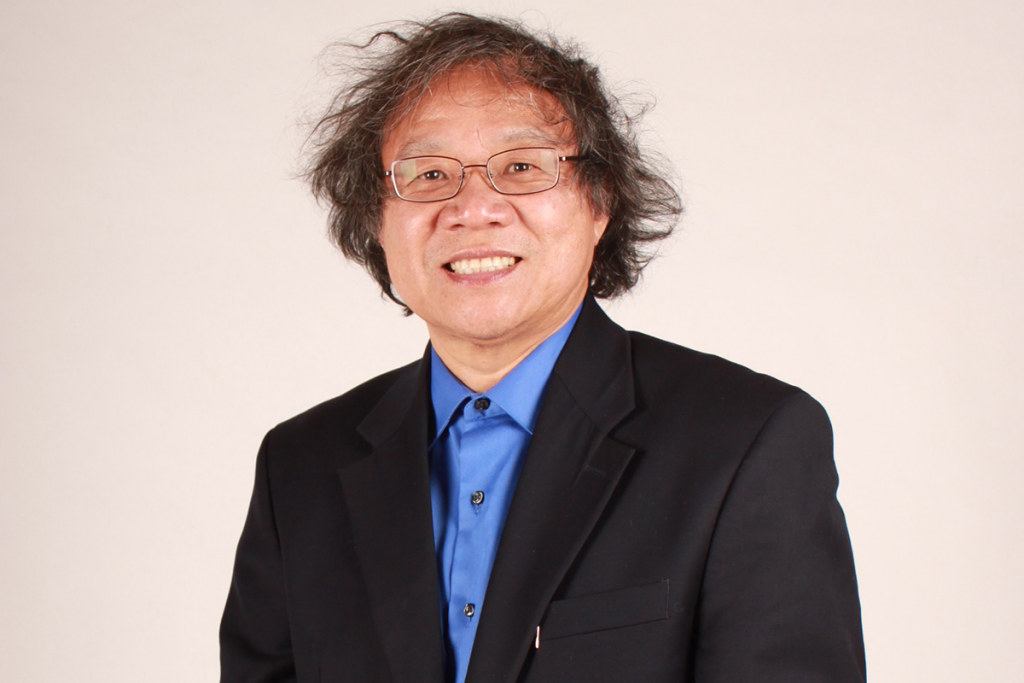
Hua-Hua Chang
Hua-Hua Chang is a Professor at Purdue University in the United States.
Dr. Chang’s research spans both theoretical and applied domains, including Computerized Adaptive Testing (CAT), Cognitive Diagnosis, and Differential Item Functioning. Dr. Chang is also at the forefront of developing innovative web-based assessment tools to enhance personalized learning. Dr. Chang is widely recognized for his pioneering contributions to CAT, where his innovative algorithms have significantly advanced the delivery of personalized assessments. More recently, his research has explored the intersection of CAT and generative AI, demonstrating how adaptive testing data can inform AI systems to produce learner feedback that is both concise and richly detailed. Dr. Chang’s work has earned him accolades from leading professional organizations, including AERA, NCME, and APA. He is also honored as a fellow of both the American Educational Research Association (AERA) and the American Statistical Association (ASA).
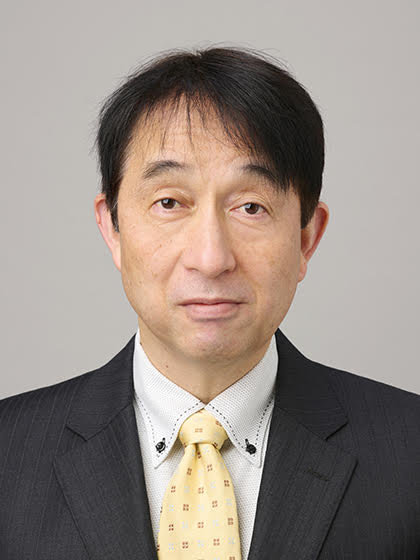
Maomi Ueno
Maomi Ueno is a Professor at the Graduate School of Informatics and Engineering at The University of Electro-Communications in Japan.
He received his B.S. and M.S. degrees in Education from Kobe University in 1989 and 1992, respectively, and his Ph.D. in Computer Science from Tokyo Institute of Technology in 1994. He was an assistant professor at the Graduate School of System Science at Tokyo Institute of Technology from 1994 to 1996. He is now a professor at the Graduate School of Informatics and Engineering at The University of Electro-Communications. His research interests span a range of areas, including data science, Bayesian statistics, and algorithm development, resulting in over 150 publications in international journals and conferences. He has been active in both local and international academic societies, including the program committees of AAAI, IJCAI, PGM, AISTAT, AIED, and EDM. He has also served as Local Steering Committee Chair for ICALT 2007 and AIED 2023. He received the Best Paper Award at the 20th IEEE International Conference on Tools with Artificial Intelligence (ICTAI 2008), as well as Outstanding Paper Awards at e-Learn 2004, e-Learn 2005, e-Learn 2007, and ED-MEDIA 2008.
The title of his keynote is Addressing the Accuracy-Exposure Trade-off: Computer Science and AI approach for Computerized Adaptive Testing

Ricardo Primi
Ricardo Primi is a Psychologist, Associate Professor at Universidade São Francisco (USF), Campinas, Brazil.
He received his Ph.D. in School Psychology and Human Development at University of São Paulo (with part developed at Yale University). He is a member of the scientific committee of EduLab21 at Ayrton Senna Institute (IAS) He was visiting scholar in 2020 at University of California Berkeley, Institute of Personality and Social Research) CAPES scholarship) and visiting scholar at Lemann Center, Graduate School of Education at Stanford University in 2020. From 2017 he became part of the Advisory Commission on Statistics and Psychometrics of DAEB /INEP (Brazil). He was a member of the questionnaire expert group for PISA 2021 coordinated by the Educational Testing Service (ETS), He is currently member of Technical Advisory Group of OECD study of Social and Emotional Skills, Teaches courses in Psychological Assessment, Psychometrics, Statistical Methods, Item Response Theory and Structural Equation Modeling. Develops research on the Intelligence and Personality Assessment and AI applied to psychometrics
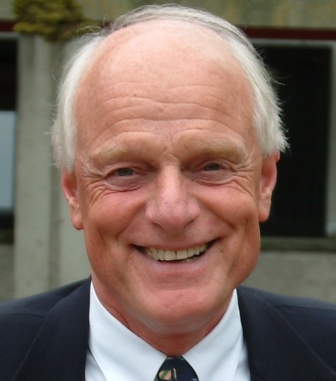
Wim J. van der Linden
(Presidential address)
Wim J. van der Linden is Professor Emeritus of Measurement and Data Analysis, University of Twente, Enschede, The Netherlands.
He is a former Distinguished Scientist and Director of Research and Innovation, Pacific Metrics Corporation, Monterey, CA, and Chief Research Scientist, CTB/McGraw- Hill, Monterey, CA. Dr. van der Linden received his PhD in psychometrics from the University of Amsterdam. His research interests include item response theory, adaptive testing, optimal test assembly, observed-score equating, parameter linking, statistical detection of cheating and response time modeling. He is the author of Linear Models for Optimal Test Design (Springer, 2005) and the editor of the three- volume Handbook of Item Response Theory: Models, Statistical Tools, and Applications (Chapman & Hall/CRC, 2016, 2018). He is also a co-editor of Computerized Adaptive Testing: Theory and Applications (Kluwer, 2000; with C. A. W. Glas), and its sequel Elements of Adaptive Testing (Springer, 2010; with C. A. W. Glas). Dr. van der Linden has served on the editorial boards of nearly every major test-theory journal and is co-editor for the Chapman & Hal//CRC Series on Statistics for Social and Behavioral Sciences. He is also a former President of the National Council on Measurement in Education (NCME) and the Psychometric Society, Fellow of the Center for Advanced Study in the Behavioral Sciences, Stanford, CA, was awarded an Honorary Doctorate from Umea University in Sweden in 2008, and is a recipient of the AERA E. F. Lindquist Award as well as the ATP, NCME and Psychometric Career Achievement Awards for his work on educational measurement. The title of his keynote is Simplifying large-scale educational assessments through the use of Bayesian adaptive testing.